I spoke with someone yesterday whose parents and siblings are still in Iran.
No contact for four days.
He sat across from me, told me about it quietly, and then—almost apologetically—pivoted back to the conversation we were having about his property. His lot. His plans. His family’s future here.
I’ve been thinking about that moment ever since.
TL;DR (Key Takeaways)
- Global instability isn’t stopping people from building—it’s accelerating the decision for many
- Past a threshold, permanent uncertainty stops causing paralysis and starts driving action
- Multi-generational housing demand in Metro Vancouver is driven by psychology, not just economics
- Immigrant communities who lost wealth overnight understand the durability of real property at a cellular level
- The people making moves now aren’t ignoring uncertainty—they’ve made peace with it
- Waiting for a “calm” market is a strategy that never pays off
The question nobody is asking about housing
Every analyst I read is watching interest rates. Bond yields. Municipal permit timelines. Construction costs per square foot.
Nobody is asking the question that actually determines whether people act or freeze:
What does global chaos do to the ordinary person’s willingness to make a long-term bet on their own future?
Because right now, the backdrop is relentless. Wars that don’t end. Economies lurching. Political systems that feel less stable than they did five years ago. A news cycle that has trained all of us to expect the next shock before the last one has settled.
The conventional answer—the one economists model—is that uncertainty makes people retreat. Hold cash. Wait for clarity. Don’t commit to a 30-year mortgage when the world feels like it’s on a 30-day cycle.
But I’m not sure that’s what I’m actually seeing on the ground.
What uncertainty actually does to people
There’s a threshold effect that nobody talks about.
Up to a point, uncertainty causes paralysis. People freeze. They wait. They tell themselves they’ll move when things “calm down.”
But past a certain threshold—when the uncertainty becomes the permanent condition rather than a temporary interruption—something different happens.
People stop waiting for calm. They start building anyway.
Not because the fear goes away. It doesn’t. The man I spoke with yesterday was genuinely scared for his family. That fear was real and present and sitting right there in the room with us.
But humans are not wired to stay frozen indefinitely. We are wired to create stability where we can find it, even when the wider world refuses to cooperate.
And in BC, in 2026, the place people are increasingly choosing to create that stability is in land. In property. In housing that can hold a family across generations.
The multi-generational instinct
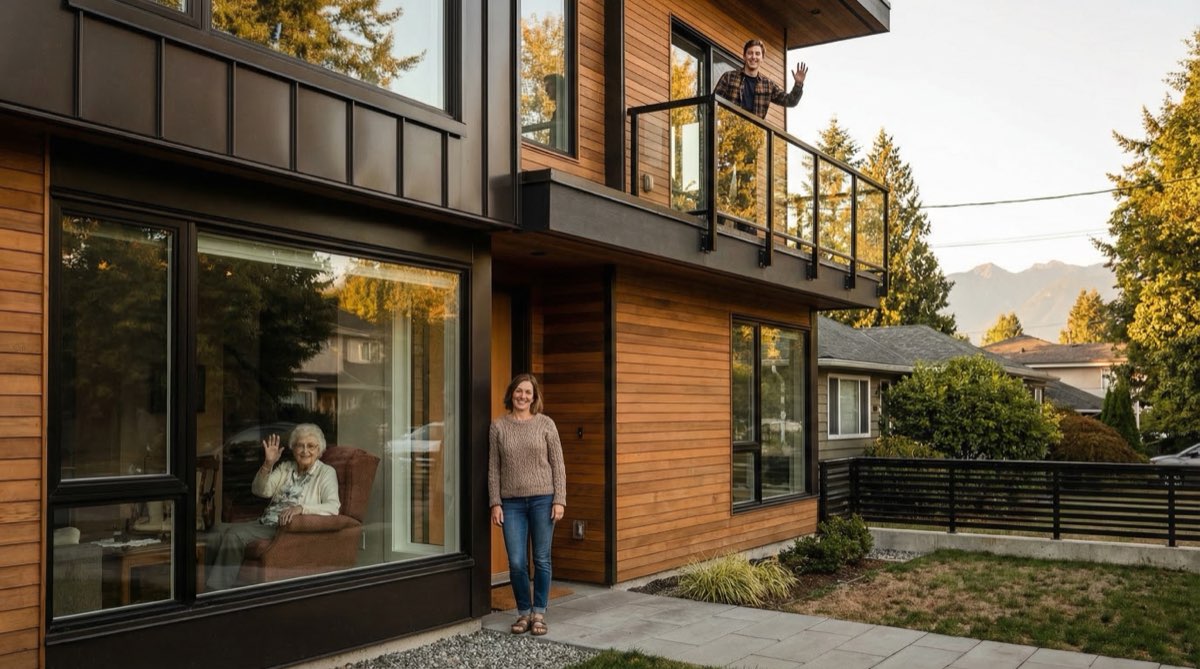
I think the surge of interest in multi-generational housing—the six-plex where parents take one unit, adult kids take another, and the rental income covers the mortgage—is not primarily a financial decision.
It’s a psychological one.
When the world outside feels unstable, the instinct is to pull the people you love closer. To stop depending on systems you can’t control—a rental market, a landlord’s goodwill, a market cycle—and build something you actually own.
A multi-generational home is not just a real estate strategy. It’s a declaration: we are going to be okay, because we built something together that no market correction can take away.
The Iranian community in Metro Vancouver, to be specific, understands this at a cellular level. Many came from a place where wealth could disappear overnight—confiscated, devalued, left behind at the border. What you carry in your mind and your relationships, and what you build in bricks and mortar, is what survives.
That instinct is not irrational. It’s ancient. And it’s driving more conversations about multiplexes and multi-gen builds than any government incentive program ever has.
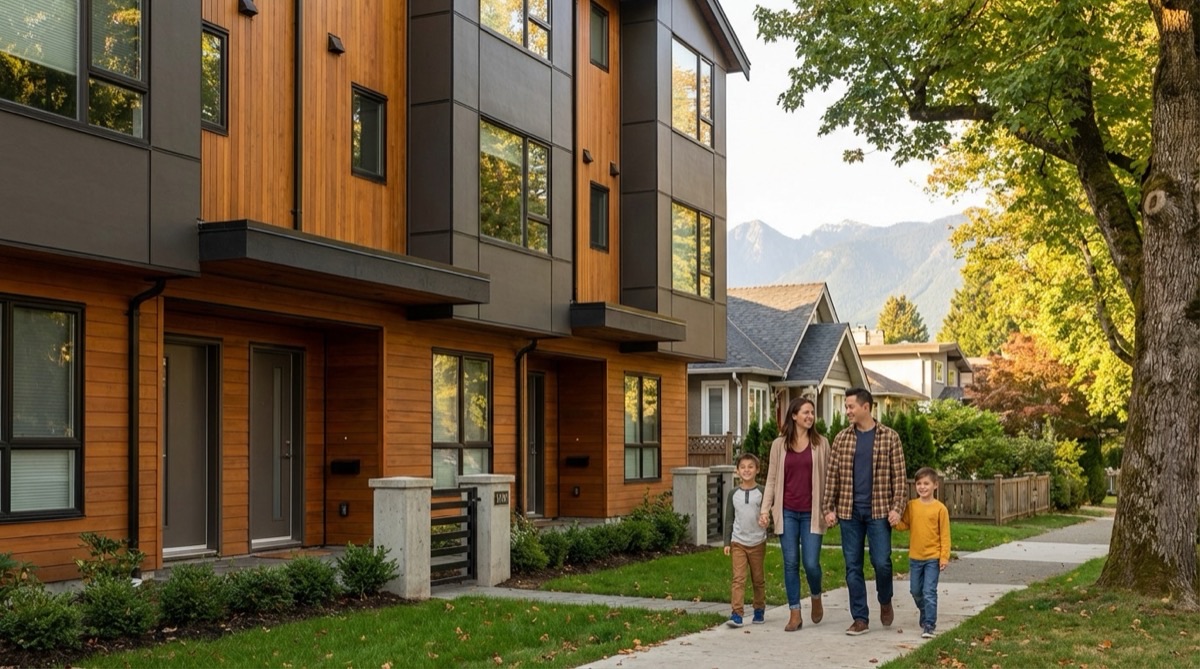
CMHC reported multi-generational households in Canada have risen 45% since 2001. In Metro Vancouver, where a detached home averages $2.0-3.5M and a multiplex unit runs $1.0-1.7M, the economics reinforce what the psychology already demands. Three generations under one roof—or at least one address—isn’t a compromise. For many families, it’s the plan.
Are we getting numb? Or are we getting clearer?
I don’t think we’re getting numb to the chaos.
I think we’re getting clearer about what we can and cannot control.
You cannot control whether a conflict escalates on the other side of the world. You cannot control what central banks decide next quarter. You cannot control the news cycle or the political moment or the thousand things that could go wrong between now and two years from now.
You can control whether you do something today with the asset sitting under your feet.
The people I see making decisions right now—starting the multiplex process, putting together a JV, running the numbers on a multi-gen build—are not the people who are ignoring uncertainty.
They are the people who have made peace with it.
They’ve decided that waiting for a stable world is a strategy that will never pay off. That the only moment they actually have is this one. And that the best hedge against an unpredictable future is not cash under the mattress—it’s a well-structured, well-located, income-generating piece of real estate that keeps producing regardless of what happens to interest rates or governments or headlines.
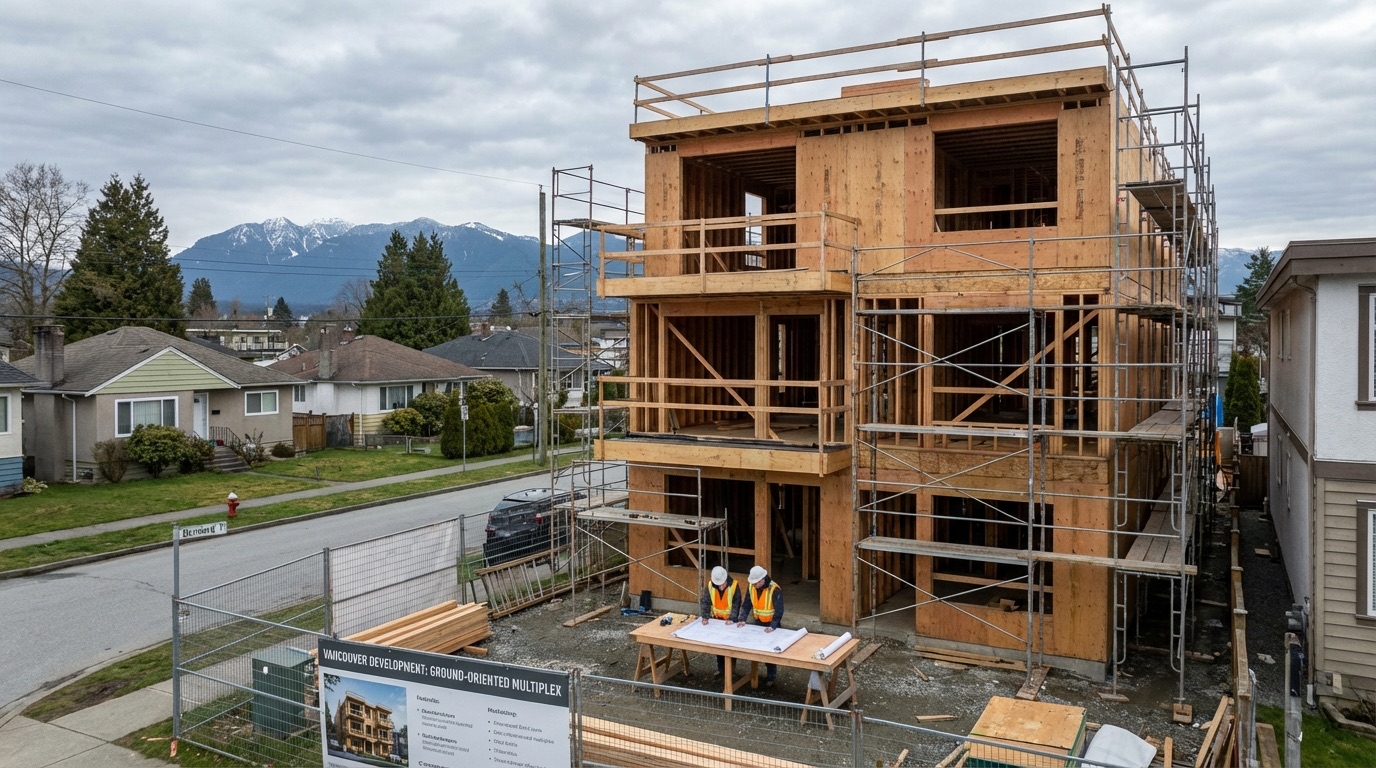
Vancouver’s 497 multiplex applications filed as of January 2026 tell that story. So do the $300M in multiplex-focused land transactions in 2024. People aren’t waiting. Some of the busiest months for VanPlex inquiries have been the months with the worst headlines.
Get up the next day
My contact with family in Iran will check his phone again this morning. He’ll feel the knot in his stomach.
And then he’ll get up and go about his life. Because that’s what people do.
That’s not denial. That’s not numbness. That’s the stubborn, quiet, deeply human refusal to let the worst possibilities crowd out the life still available to be lived.
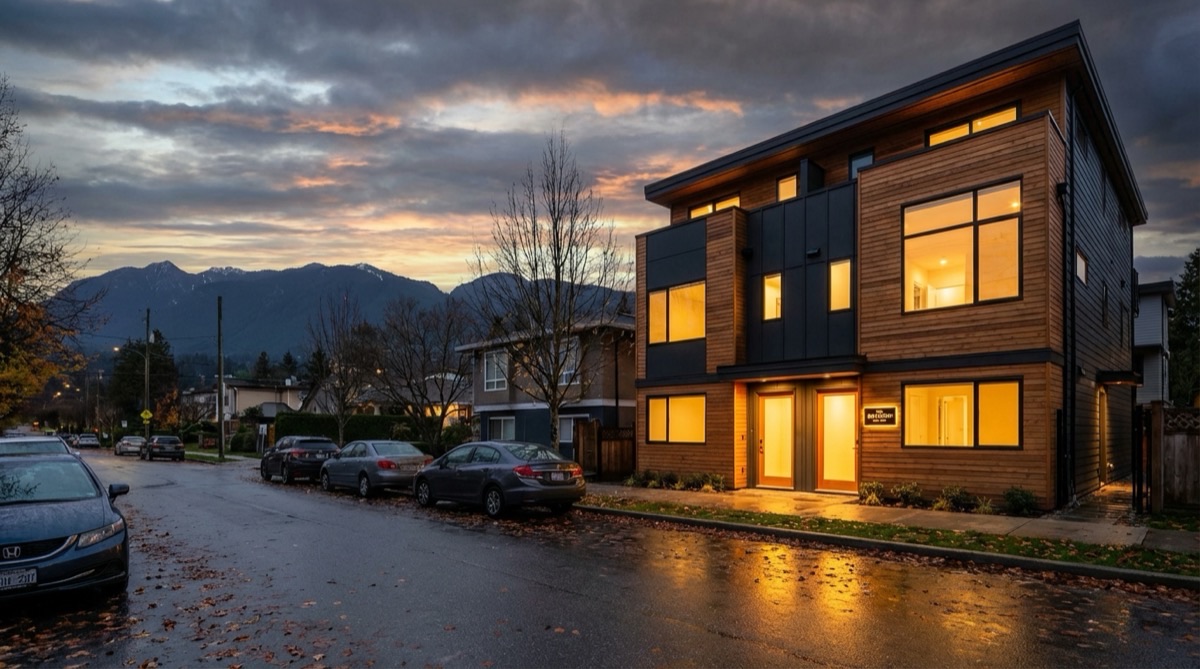
Building a multiplex. Creating a home that holds multiple generations. Turning a single-family lot into a legacy asset. These are not escapes from uncertainty.
They are answers to it.
If this resonated—especially if you’ve been sitting on a decision, waiting for the moment to feel “right”—I’d genuinely like to hear where you’re at. What’s the world situation doing to your thinking about property? Are you holding still or moving forward?
Check where your property stands at VanPlex.ca. It takes two minutes.
David Babakaiff | Co-Founder & CEO, VanPlex Technologies